Vastu Consultation
Namita Raj offers comprehensive Vastu consultation services that integrate Vedic Vastu, Scientific Vastu, and Geobiology energy assessment. Her approach is rooted in traditional Shastric wisdom and supported by modern, observation-based techniques, ensuring that both visible structure and subtle energies of a space are evaluated with clarity and discipline.
Each Vastu consultation is designed to understand how space, direction, land, structure, and energy interact with human life. The objective is not only to correct imbalance, but to create long-term harmony that supports stability, prosperity, and overall well-being in residential, commercial, and professional environments.

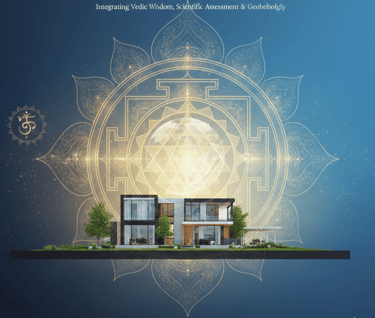
Vastu Shastra offers a structured approach to creating balance between human life and the natural elements that influence it. By aligning space with the five fundamental elements—earth, water, fire, air, and space—Vastu helps restore harmony within living and working environments. When properly applied, it supports clarity of thought, emotional stability, improved efficiency, and steady progress across different areas of life.
It is advisable to seek professional guidance before purchasing land, constructing a property, or making significant structural changes. A detailed consultation ensures that orientation, layout, land energy, and environmental influences are assessed carefully, helping avoid future imbalances and unnecessary complications.
Namita Raj, as a Scientific Vastu Consultant, offers both onsite Vastu visits and online consultations for clients across locations. Her work integrates traditional Vastu principles with observation-based energy assessment techniques and appropriate diagnostic tools. By combining structured analysis with practical correction methods, she focuses on creating balanced environments that support long-term stability, well-being, and growth.
Vastu, when understood as a disciplined science, becomes a practical method of harmonising material space with natural forces—helping individuals live and work in alignment with their surroundings rather than in resistance to them.


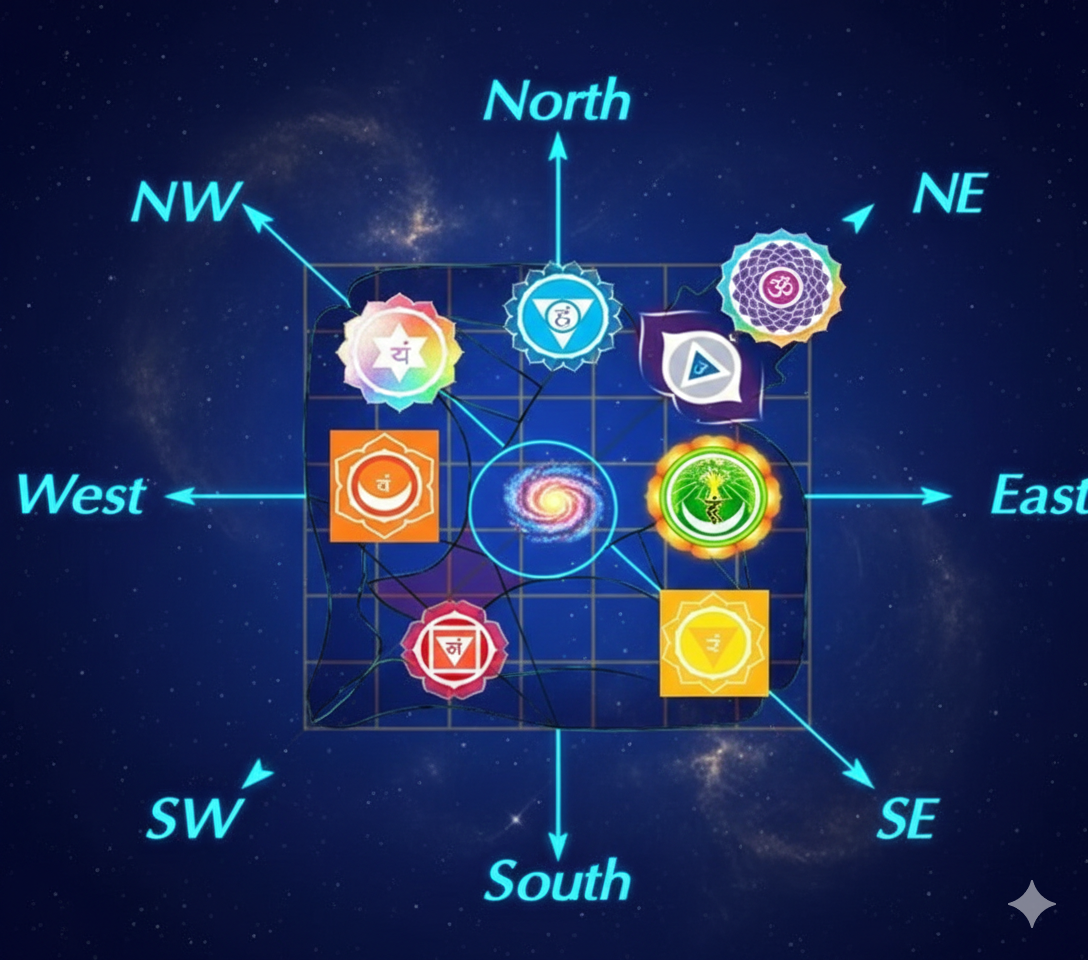
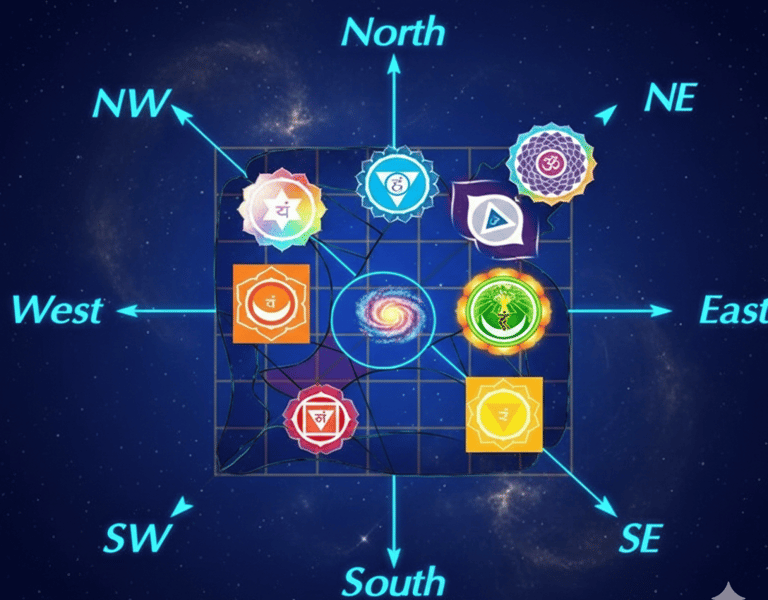
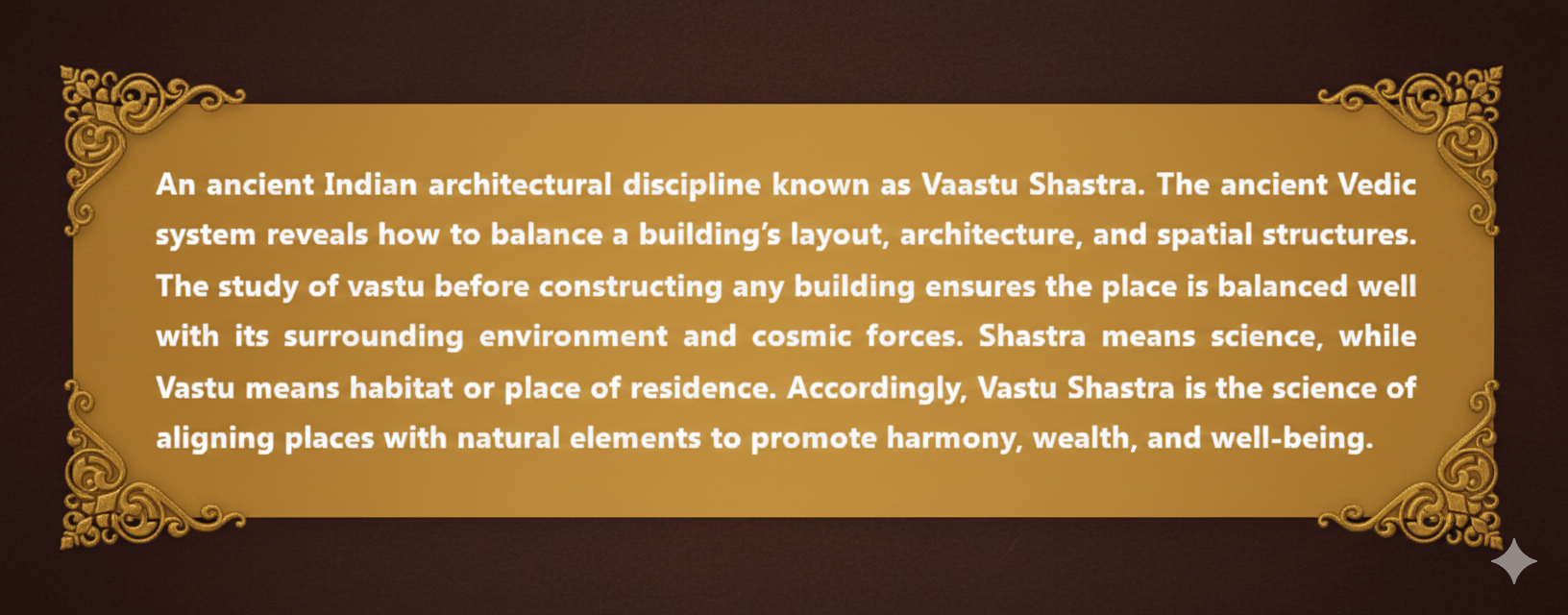
Vastu Shastra is an ancient science of architecture that establishes a harmonious relationship between human dwellings and the natural forces that surround them. Rooted in time-tested principles, Vastu integrates space planning, directional alignment, and elemental balance to create environments that support health, stability, prosperity, and overall well-being. The word “Vastu” itself reflects its essence—“Vaas” meaning residence and “Tu” referring to the individual who resides—emphasising the relationship between space and its occupant.
At its core, Vastu is the study of how occupants interact with buildings in relation to land, location, direction, and environmental influences. It examines how structures align with natural laws, including micro-climatic conditions, magnetic flow, sunlight, air movement, and surrounding geography. Proper alignment ensures that the built environment supports rather than obstructs the natural flow of energy.
In modern understanding, Vastu can be viewed as the creation of a sustainable and balanced habitat—one that promotes environmental harmony, functional efficiency, and healthy living. Scientific Vastu extends these principles further by analysing how buildings respond to natural forces and environmental dynamics, ensuring that both traditional wisdom and contemporary understanding work together to create stable and supportive spaces.


Vastu is often regarded as a traditional response to concerns associated with Building Related Illness (BRI) and Sick Building Syndrome (SBS), as it emphasises the importance of environmental balance, ventilation, light, orientation, and natural integration in architectural design. Ancient Vastu texts such as Mayamatam and Manasara included detailed guidelines on home construction, town planning, and the thoughtful integration of temples, water bodies, gardens, and open spaces to ensure harmony between human settlements and nature.
Classical scriptures including Raj Vallabh, Somarangam Sutradhar, Aparajita Parichcha, Mayamatam, Manasara, and references in Kautilya Shastra highlight the depth and systematic nature of traditional Indian architectural knowledge. These texts describe principles governing residential buildings, cities, forts, industries, and public spaces—any environment where human life and activity take place. In this context, “Vastu” encompasses all forms of built environments where people live, work, and interact.
Vastu can be understood as an intelligent science that harmonises the five fundamental elements—earth, water, fire, air, and space—creating balance between material structures and human occupants. When applied thoughtfully, it supports functional efficiency, environmental harmony, and overall well-being, ensuring that spaces are aligned with natural forces rather than working against them.


Understanding Vastu as a Living Science
Vastu is not limited to walls, rooms, or directions alone. It is a living science that studies how natural forces—such as earth energy, magnetic flow, sunlight, air, and cosmic influences—interact with built spaces.
In Vedic understanding, a space is governed by directional energies and Vastu Devatas, while scientific assessment focuses on how land and environmental energies affect comfort, clarity, health, and productivity. When these forces are balanced, a space becomes supportive; when disturbed, resistance and instability may arise.


Vedic Vastu Consultation
Vedic Vastu consultations are rooted in ancient Shastric knowledge that recognises the influence of 32 Vastu Devatas, each presiding over specific zones and directions within a property. These energies influence various aspects of life, including health, relationships, finances, learning, and emotional well-being.
During a Vedic Vastu assessment, Namita Raj evaluates:
Directional alignment of the space
Placement of key functional areas
Balance between elements
Flow of energy across zones
Corrections and guidance are suggested with discipline and practicality, focusing on alignment and harmony rather than excessive remedies or demolition.
According to ancient references in the Matsya Purana, the origin of Vastu Purusha is connected to a symbolic mythological event. It is said that during a fierce battle between Lord Shiva and the demon Andhakasura, a drop of Lord Shiva’s perspiration fell upon the Earth, giving rise to the Vastu Purusha. This powerful being is described as intense and uncontrollable in nature, representing raw cosmic energy.
Concerned by this force, the deities led by Lord Indra subdued and positioned the Vastu Purusha within a defined square boundary upon the Earth, placing his head in the northeast and his feet in the southwest. This symbolic posture forms the conceptual foundation of the Vastu Mandala, which guides spatial planning and directional alignment in traditional Vastu Shastra. The placement reflects the distribution of energies across a plot of land.
According to the legend, Vastu Purusha sought Lord Shiva’s blessings and was granted the boon that he would be honoured whenever a structure was built upon the land. It is believed that when respected through proper alignment and traditional rituals, the Vastu Purusha blesses the occupants with protection and stability. In this symbolic understanding, Vastu encourages mindful construction and adherence to Vedic principles, ensuring that human activity remains aligned with natural and cosmic order.


In traditional Vastu Shastra, the Vastu Purusha is described as having specific Marma (sensitive) points within his symbolic body that must be respected during construction. Ancient texts such as Mayamatam emphasise that certain zones of a plot represent vital energy points. These areas should be carefully considered while designing foundations, structural load points, entrances, and key functional spaces. The teaching highlights the importance of mindful planning, as improper alignment of critical zones is believed to disturb the energetic balance of the structure and, symbolically, the well-being of its occupants.
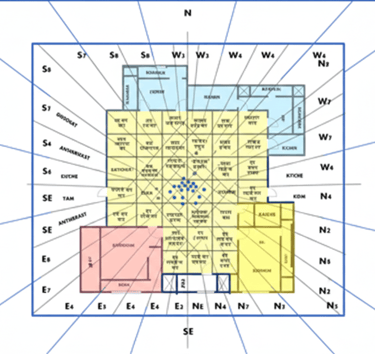
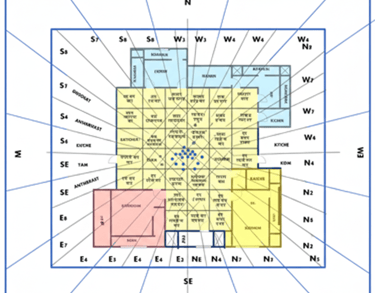
The Vastu Purusha is conceptualised within a geometric grid known as the Vastu Mandala, which divides a plot into measured squares aligned from East to West and North to South. Two primary grid systems are traditionally used: the 64-square Mandala and the 81-square Mandala. The Matsya Purana describes the 81-square grid (Paramasaayika Mandala) as containing 45 deities distributed across the layout—32 positioned in the outer boundary squares and 13 within the inner core. Each zone represents a distinct energetic principle influencing various aspects of life.
This mandala system forms the foundation for determining ideal placement of rooms, entrances, water bodies, fire zones, and other structural elements. Rather than being viewed as superstition, the Vastu Mandala represents a systematic method of spatial planning rooted in geometry, direction, and elemental balance. By aligning construction with this grid, Vastu seeks to harmonise built environments with natural forces, ensuring that space supports stability, clarity, and overall well-being.
Scientific Vastu Assessment
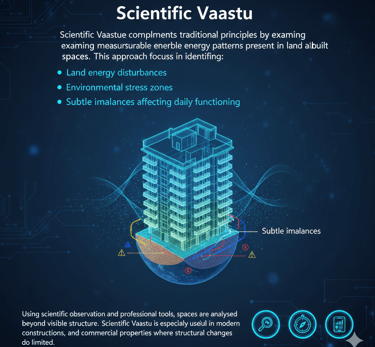
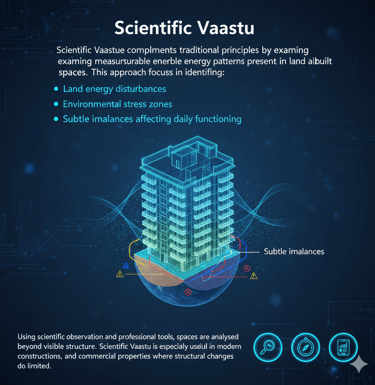
Scientific Vastu complements traditional principles by examining measurable and perceptible energy patterns present in land and built spaces. This approach focuses on identifying:
Land energy disturbances
Environmental stress zones
Subtle imbalances affecting daily functioning
Using scientific observation and professional tools, spaces are analysed beyond visible structure. Scientific Vastu is especially useful in modern constructions, apartments, and commercial properties where structural changes are limited.
Plot & Land Vastu


Residential Vastu
Commercial Vastu




Industrial Vastu


Hospital Vastu
Hotel Vastu




Onsite & Online Vastu Consultations
Namita Raj offers onsite Vastu consultations for detailed physical and energy assessment of properties. For clients located at a distance, online Vastu consultations are also available, conducted through layout analysis, discussions, and guided evaluation methods.
Both consultation modes maintain the same depth, clarity, and professional integrity.
A Solution-Centric Approach to Vastu
Vastu consultation is not about fear, superstition, or quick fixes. It is a solution-centric process that focuses on identifying root causes and restoring balance through understanding, alignment, and disciplined correction.
The goal is always long-term harmony—allowing spaces to support life naturally, without excessive intervention.
When space is aligned, effort reduces and flow returns naturally.
Contact
Reach out for personalized guidance
Phone
hello@namitaraj.com
+91 9582103812
This website is crafted by Uttar Phalguni Studios
All information and guidance provided by Namita Raj are intended solely for the well-being and betterment of individuals seeking consultation. While every effort is made to offer responsible, structured, and thoughtful insight, Namita Raj does not assume liability for the interpretation, application, or misuse of information derived from consultations conducted through the website, telephone, email, personal interaction, or any other mode of communication.
Clients are encouraged to exercise personal judgment and responsibility when applying guidance received during consultations.
© 2025. Namita Raj - All rights reserved.